
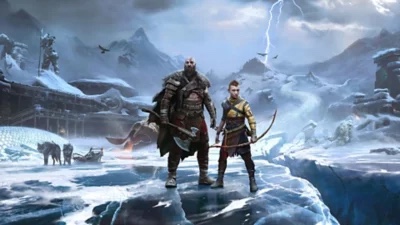
I cannot encapsulate my feelings about this game into one singular post. The themes of fate, love, betrayal, and strength portrayed through every action that Kratos and Atreus take, are just one reason that this game is the perfect sequel. However, I will try my best to condense my thoughts about this game, as I have just finished my first play-through.
God of War Ragnarök, The long-awaited sequel to the critically acclaimed 2018 God of War, sees our protagonists of Kratos and Atreus (or should I say… Loki) trying to put an end to the inevitable Ragnarök that was foreshadowed at the end of GoW 2018. As the game progresses, the imminent threat of “the end” becomes more and more apparent, as our dynamic duo forges a path to victory. They battle the mythical Norse gods such as Odin, Thor, and Hiemdall, as they reunite with old friends and foes, rekindling their storylines before it all comes to a close (or so we think).
The sequel, delivered by Santa Monica Studios, relies on three foundational pillars which, in my opinion, make the game a perfect sequel and a game of the year candidate: Graphics, Gameplay, and Storytelling. Each category offers something to all types of gamers, that’ll leave you wanting more after you’ve beaten it more than once.
Graphics
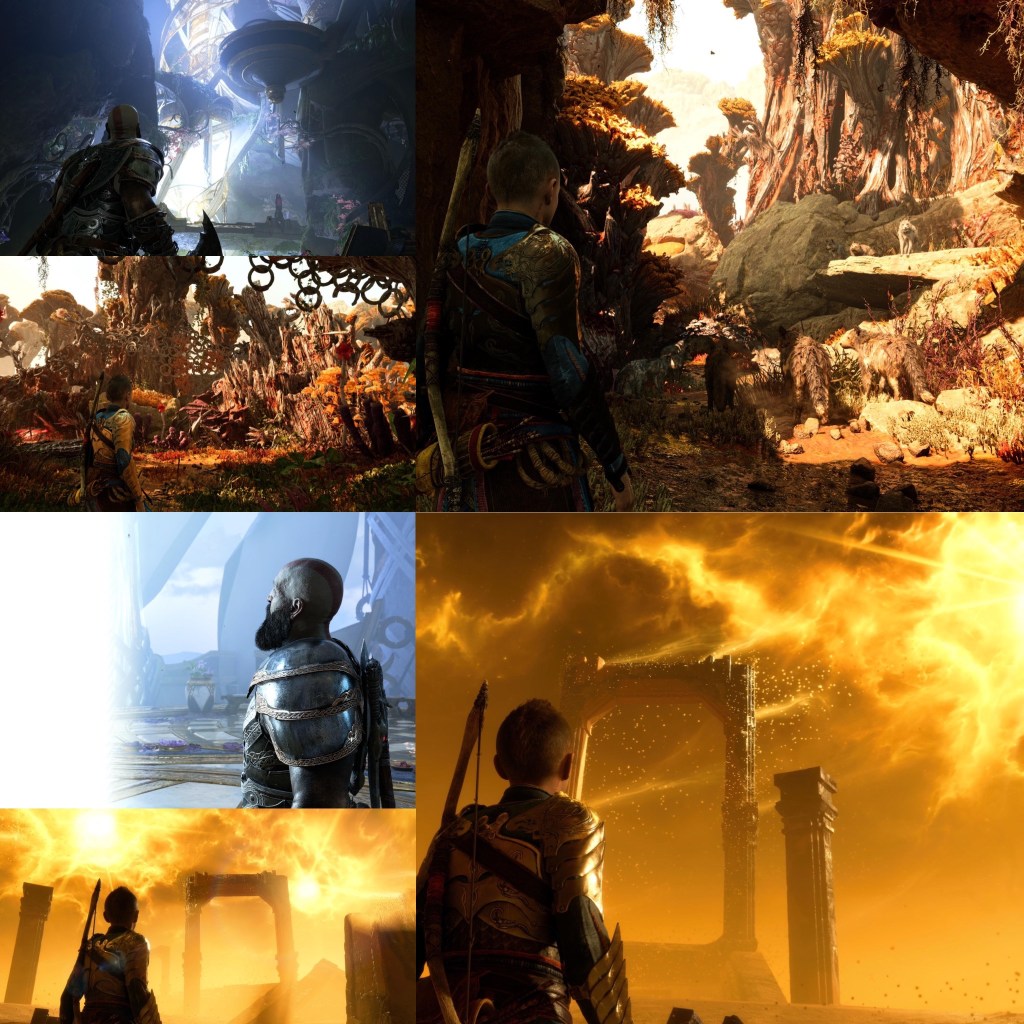
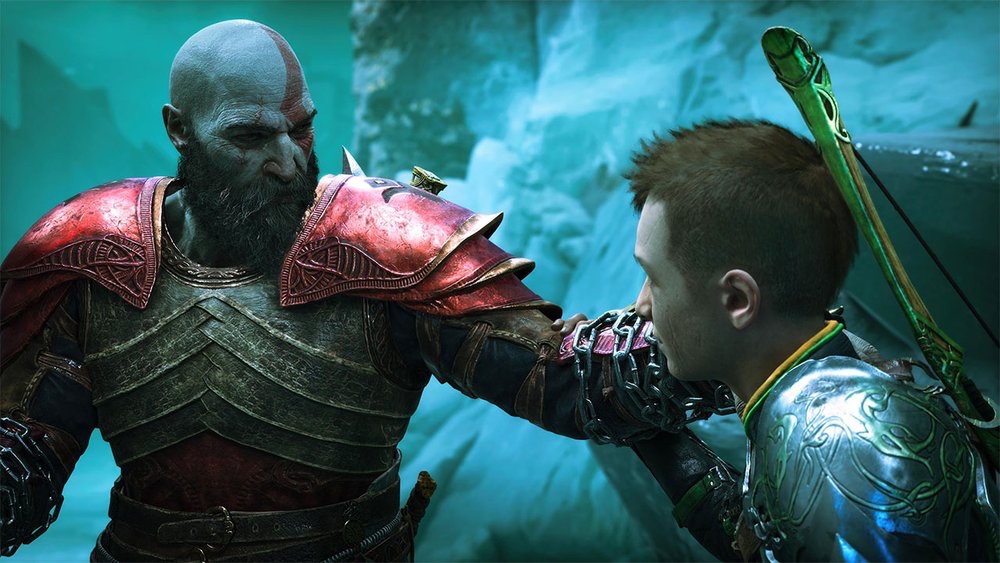
With the power of next-generation consoles, it’s no surprise that the graphics shine through. The images above were taken on a PlayStation 5, on a 4K TV, and a maxed out frame rate. Every single cutscene amazed me, from the large scale battle scenes scattered throughout the realms to the small, minor details of each hair follicle on every character. It’s clear that Santa Monica Studios wanted to take full advantage of the PS5, hence the numerous delays due to COVID-19 protocols.
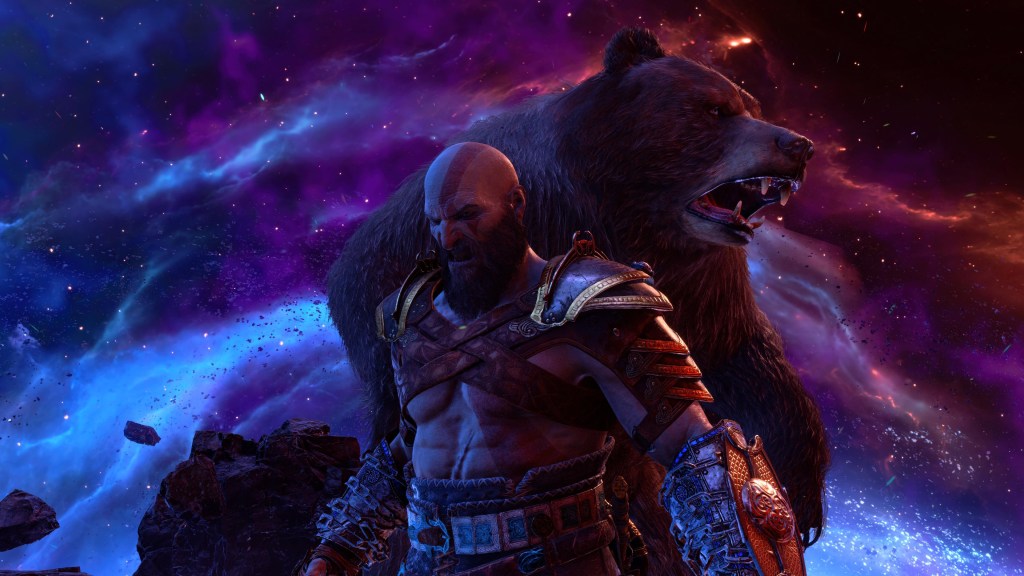
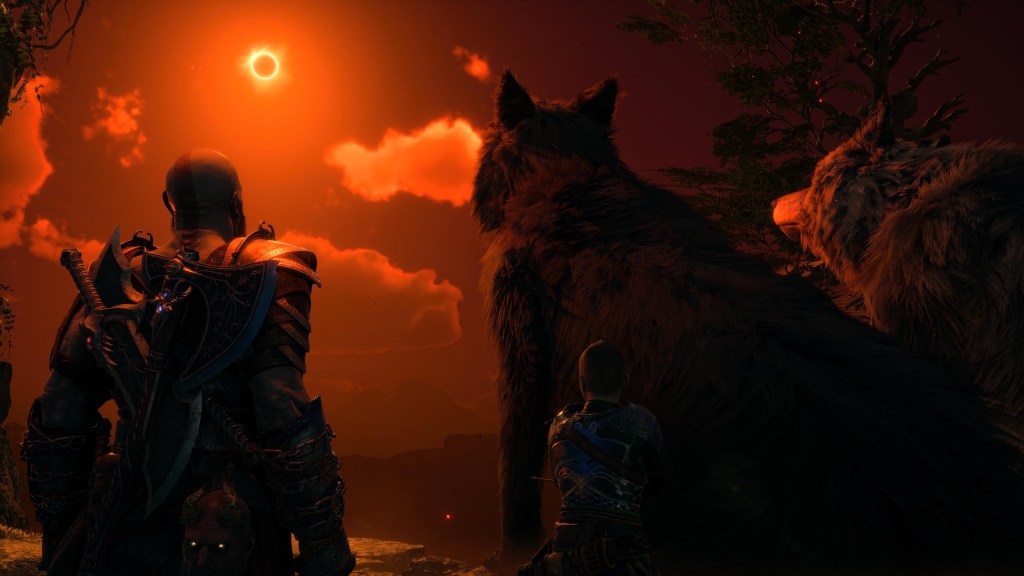
All areas of the game have their own aesthetic. Each place feels occupied or “lived in”, with its own background of triumphs and setbacks that the people of the realms had to endure at the mercury of Odin. Not many games can achieve the art of world building, but God of War Ragnarök seems to be one of the few games that meet the standard, or even exceed it.
Gameplay
We’ve discussed the beauty of the game, but what about actually playing it? Well, I’m happy to report that this game runs smoothly on every single front it presents. With a PS5 controller, the haptic feedback is stumble, and doesn’t overpower any functions in game, like a light attack for example. As for the skill-trees, armor and weapons, they have all be expanded upon from the first game. Each weapon has new skills to acquire, new runes attacks to collect and new attachments to upgrade. The big surprise in the sequel is the addition of Atreus, his intangibles that is. Kratos’ boy now has his own armor, skill-tree and weapon collection, allowing you to use him as a companion during attacks (something we didn’t get in the first game). We even see Atreus fight on his own, without the help of Kratos, showing how powerful his archery can be.
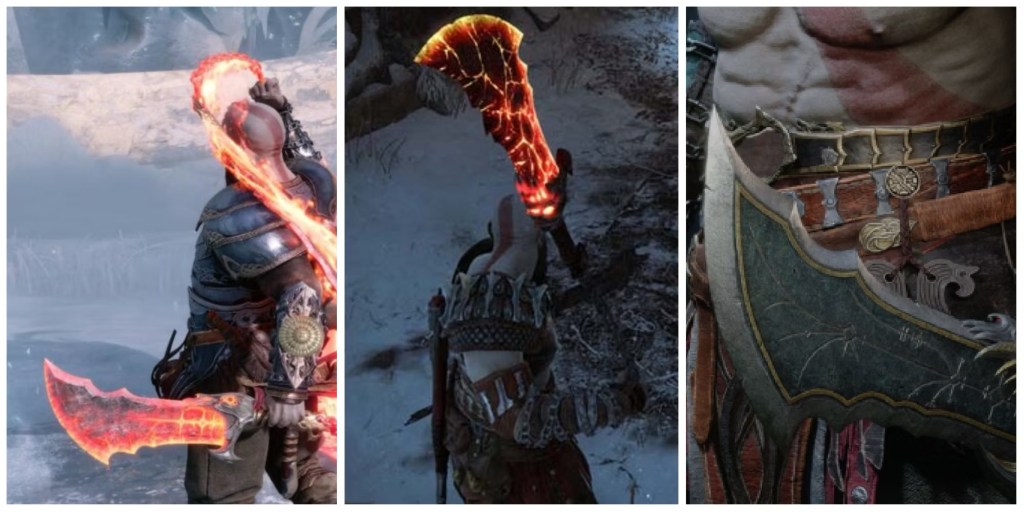
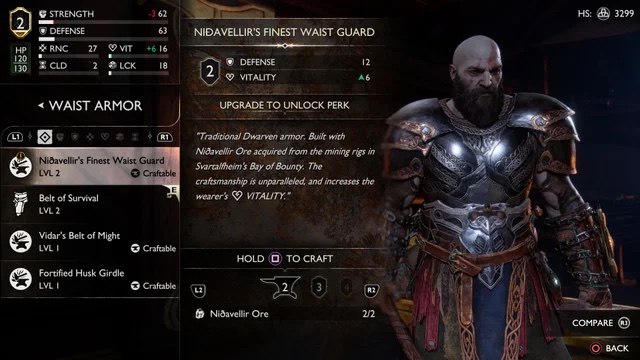
Chaining attacks comes easy whenever you’re faced with multiple enemies. Switching between the blades of chaos and the leviathan axe works like a charm in every situation I’ve encountered. There’s even a third weapon that you may run into later in the game which serves as a parkour tool as well as a formidable javelin (mild-spoiler).
There are also several new enemy types compared to the first game. Each group of enemies have their own strengths and weaknesses, with the Einherjar showing the most resilience to Kratos. These new enemies linger throughout the realms for the duration of the game as well as the post-game sequence. The post-game contains new boss fights (like the Valkyries from GoW 1), the Muspelheim trials, and tying up loose-ends with each of the character’s stories.
Gameplay mechanics are the backbone of triple-A titles. It’s easy to forget that upgrade menus, boss fights, and weapon renders take hundreds of hours to create. Santa Monica Studios’ dedication to delivering a masterpiece is clearly shown by gameplay alone. If you aren’t convinced about this game yet, the gameplay alone should persuade you to pick up a copy.
Storytelling (Mild-Spoilers ahead)
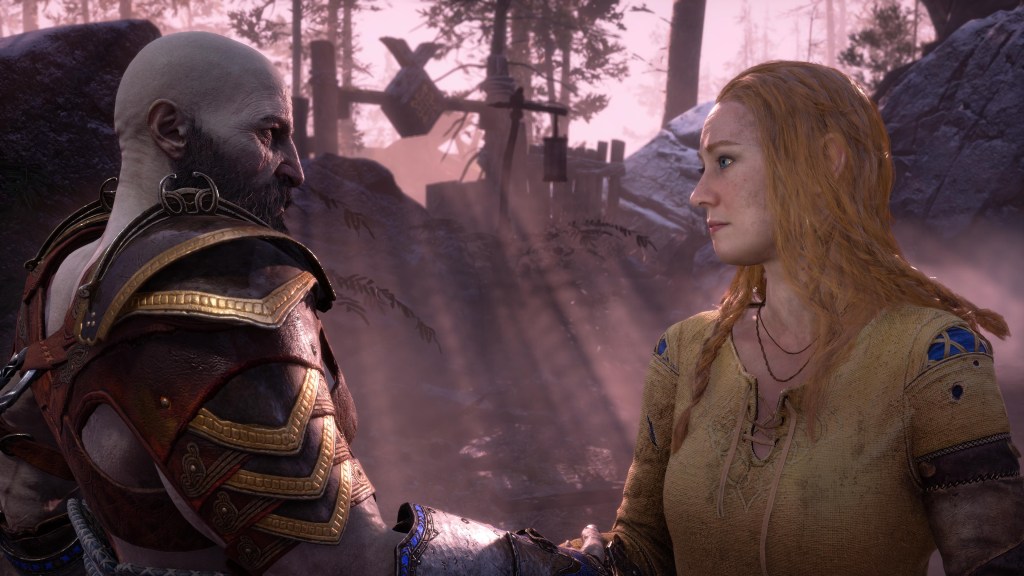
Finally, we get to the meat of the deer carcass: the story. This game is definitely more intense than the first. With multiple complex characters joining the fold such as Tyr, Thor, Thrud and Freyr, it’s no surprise that one could get sidetracked when listening to dialogue. Each character is flushed out enough to the point where you care about their story. You’ll want to know what happens next at every single break you get. Freya, from the first game, is one of the first characters we see while she’s chasing us down, due to the fact that we killed Baldur (her son from the first game). She eventually joins us in battle, but even she has her own problems. Her character arc, from the overwhelming grief she feels whenever she sees Kratos, to calling a truce in pursuit of stopping Odin once and for all, is just an example of how well written this game really is.
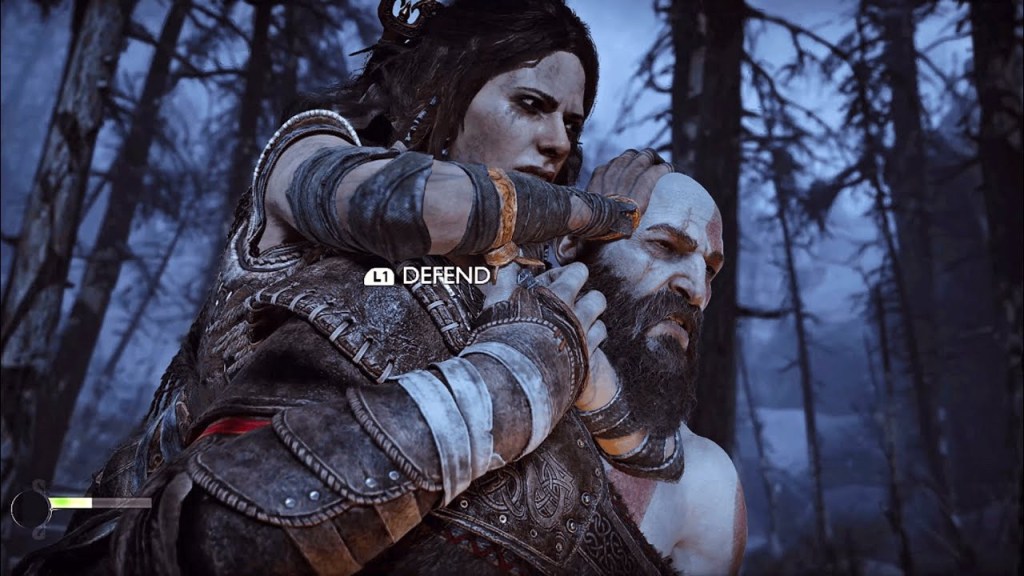
Each part of the game has a central theme to it. Whether it’s Tyr’s (Odin’s) eventual betrayal after he puts on an act of cowardice as the Norse God of War, or the sheer pain you feel for Sindri as he holds Brok’s lifeless body in his arms, there’s something to learn in every cutscene. Kratos drops some icon lines, as per usual, with Mimir in agreement at his waist side. Atreus even has his moments throughout the game, engaging in constant dialogue with characters, showing an emotional prowess that Kratos does not seem to possess (at first).
There’s a scene, around the halfway mark of the game that I would like to mention. After Brok’s death at the hands of fake Tyr (Odin), Atreus completely shuts down emotionally. As Kratos and Atreus leave to process what just happened, they find themselves in Midgard (their home), hunting deer. Kratos asks the question , “What are we going to do?”. Atreus responds with, “hunt deer”. Then Kratos goes, “Where?”. Then Atreus says “In the direction of deer”.
In the first game, when Kratos is teaching Atreus to hunt, these exact lines of dialogue are spoken. However, it is a young Atreus asking the question instead of Kratos. This indicates that Atreus is getting to the point where he’s becoming his own man, and is almost ready to venture out on his own compared to the first game, which I can only describe as a thematic bombshell.
That’s just one example of how well-written this game is. I haven’t even mentioned Atreus’ journey to Asgard, Kratos’ visions of his wife (Faye), the discovery of Ironwood (the sanctuary that was a safe haven for the giants of Joutenhiem), or the touching dialogue between Kratos and Atreus after the conclusion of Ragnarök .
Like I’ve said before, this is only a condensed review of the game. There is so much more to explore in God of War Ragnarök. The dichotomy of beauty and destruction, the methods of deception used by several friends and foes you meet along the way, and the fun you’ll obtain by tapping R1 and R2 over-and-over again, are some of the reasons why this game is the perfect sequel.
Thanks for sticking with me and reading this article! Any feedback is appreciated (grammar, flow, topics, etc). There will be some grammatical errors because I am writing this article at a very late time (11:45 PM to 1 AM EST).
You can play God of War Ragnarök on PS4 an PS5 right now, by purchasing it on the PlayStation store or at select retailers.
 Condensed media
Leave a comment